NYSDEC/PFBC Working in Partnership to Study the Upper Delaware River Tailwater Fishery
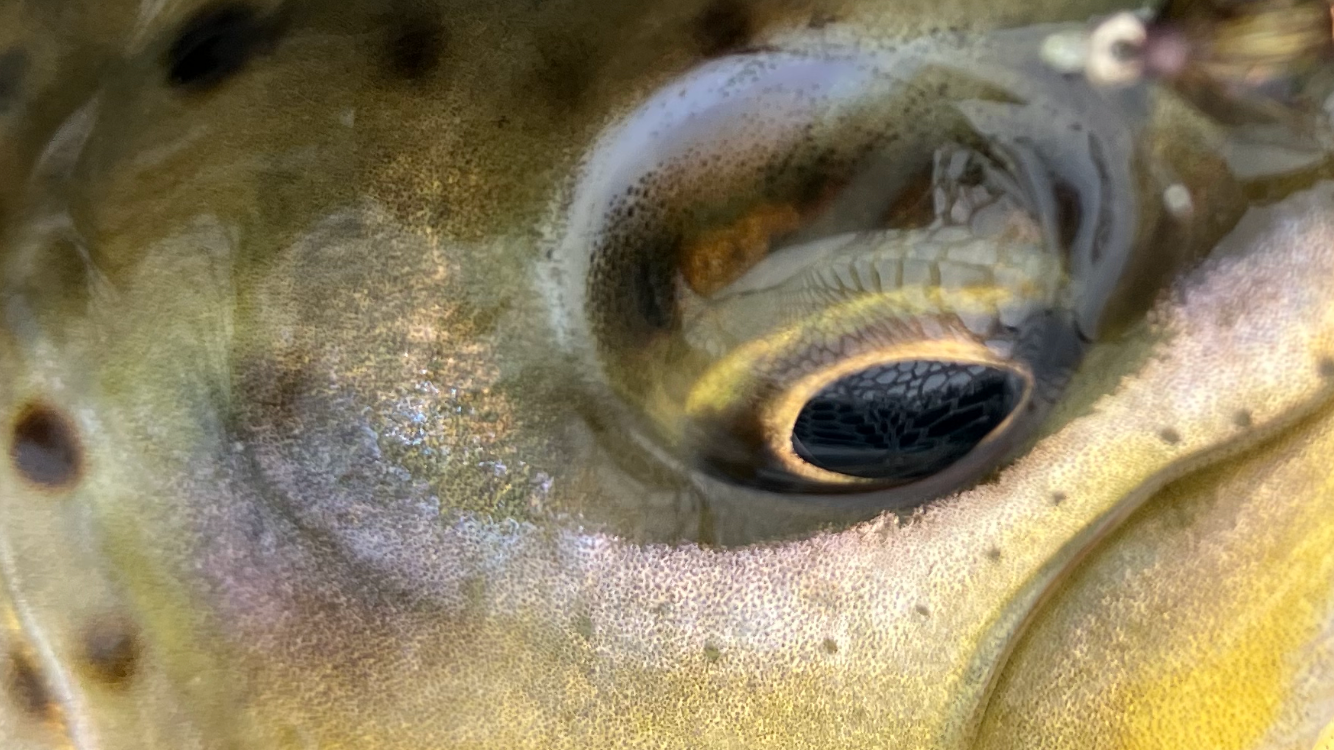
Photo Caption: Brown Trout Close Up
In recent years, the New York State Department of Environmental Conservation (DEC), in partnership with the Pennsylvania Fish and Boat Commission (PFBC), have been actively studying the Upper Delaware River tailwater fishery.
As a quick refresher, FUDR and our conservation and angling partners played a key role in working with the two state agencies to help initiate 3 important studies that take a closer look at the condition of the tailwater fishery and to develop management strategies for its long-term protection:
1. NY/PA Delaware Tailwaters Joint Fisheries Investigation Plan (JFIP) (2018-2020)
The JFIP is a 3-year study (2018-2020) that collected biological and social (angling focus) data to assess the status of the fishery and create a new baseline of scientific information.
https://dec.ny.gov/sites/default/files/2024-03/jfipsummary.pdf
2. Delaware Tailwaters Joint Trout Management Plan (2025)
This study used information from the JFIP to develop a plan that identifies future agency management priorities specifically for the UDR tailwater fishery
https://dec.ny.gov/sites/default/files/2025-02/delawaretailwatersplan.pdf
3. Angler Use and Wild Trout Young of the Year Recruitment Study (2026)
In 2021, DEC completed its first ever statewide trout management plan. As part of that plan, the state opened NY trout streams to year-round angling. In response to angler concerns about the potential impacts of the new catch and release season (October 16-March 31), the agencies initiated a 3-year impact study on many of NY’s high quality trout streams, including the UDR tailwaters, to determine impacts from increased angling pressure and on “Young of the Year” wild trout populations.
https://dec.ny.gov/sites/default/files/2026-02/troutcatchreleasestudyreport.pdf
It’s important to note that the UDR tailwater wild trout fishery has now received a substantial amount of attention and resources from both the DEC and the PFBC to expand everybody’s knowledge about the condition of the fishery and to identify key long term management objectives. We are deeply appreciative of this commitment and will continue to work with both agencies to refine and expand their work.
While constant vigilance is always required to ensure the long-term health of our wild trout fishery, these three studies reveal very positive news. Overall, the study findings depict a robust population of naturally reproducing UDR wild trout, healthy in-stream habitat conditions, and minimal impacts from the extended angling season.
It’s important to remember that the studies represent a snapshot in time and frequent monitoring, ongoing evaluation, and adaptive management strategies are critical. As many UDR anglers know, increasing pressure on the river, changing weather patterns, reservoir management, and land use practices are examples of potential threats that always require a watchful eye.
Both state agencies have made commitments to continue and expand their monitoring and project work to ensure that any negative impacts on the fishery receive rapid and corrective management responses.
Of special note, the Delaware Tailwaters Joint Management Plan created a first ever UDR Tailwaters Fisheries “Report Card” to be issued annually. The report card will evaluate each management objective in the plan and provide a status report on progress. The first report card will be issued in March 2026 and we will be sure to share that with you when it is released.
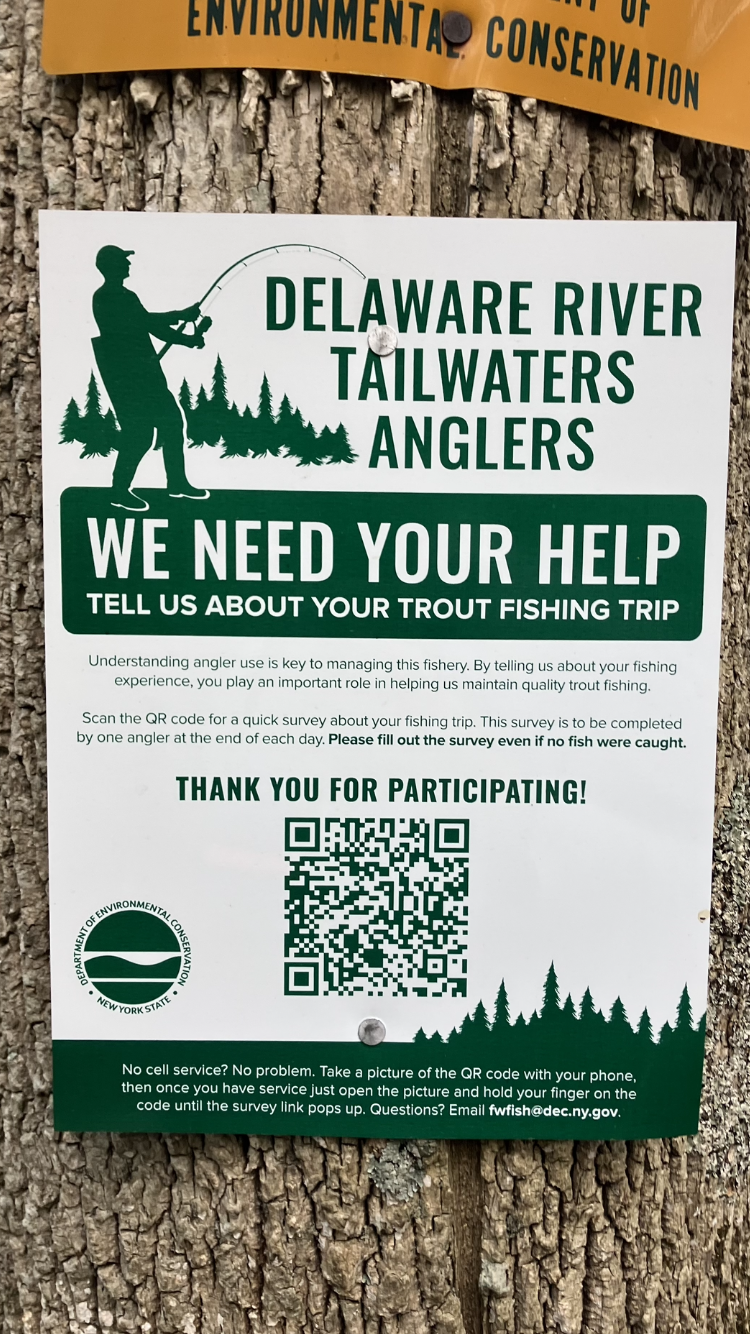
Another important element of the Tailwaters Plan is the use of a QR Code angler survey to gather important information about the UDR angling experience that can be used by the DEC to further refine their fisheries management efforts. DEC has placed survey signs at multiple access points along the river for your convenience and it only takes a few minutes to complete the survey. Thank you for taking the time to fill out the survey!
Please take a moment to review these reports and feel free to contact us with any questions or concerns.
For the River,
Jeff Skelding
FUDR Angling Advocate
skelding@fudr.org